

I Tested Whether ‘Good Fortune’ (2025) Was Right About Gig Work. Here's What I Found.
It was 3:11pm on a Thursday when I tentatively accepted my first UberEats delivery. I was on my way home from an errand, still wondering if I should test the app now that my account had just been approved. What if I just tried this? Within moments of turning it on, my phone pinged: an order. $6.23. Pick up from a kebab shop across the street, drop off at a university just ten minutes away. My brain barely had time to process before I clicked “accept.” And just like that, I was on the clock.
I'd used delivery apps before - years ago as an occasional UberEats customer, then more recently tried DoorDash for the first time while staying in a hotel. I knew the customer side: browse, tap, order, wait. But I'd never thought much about what happened on the other side of that transaction.
Then I watched Good Fortune, Aziz Ansari’s film about a struggling gig worker who life-swaps with a wealthy VC who owns the very company he works for. It paints a brutal picture of food delivery: Jeff, the VC, is one-starred for missing condiments the restaurant didn’t pack, denied bathroom access during deliveries, loses money on gas, and even has to sleep in his car because payment is delayed. He is eventually terminated and replaced by robots. It’s at this point that he breaks: "How do people do this? How is everyone not just miserable and angry all the time?"
It’s a comedy, so it’s supposed to be exaggerated for effect. But I really had to know: was the sentiment real? The frustration, the exploitation, the feeling of being disposable - do drivers actually experience this… or was it just good storytelling?
I signed up for both UberEats and DoorDash to find out.
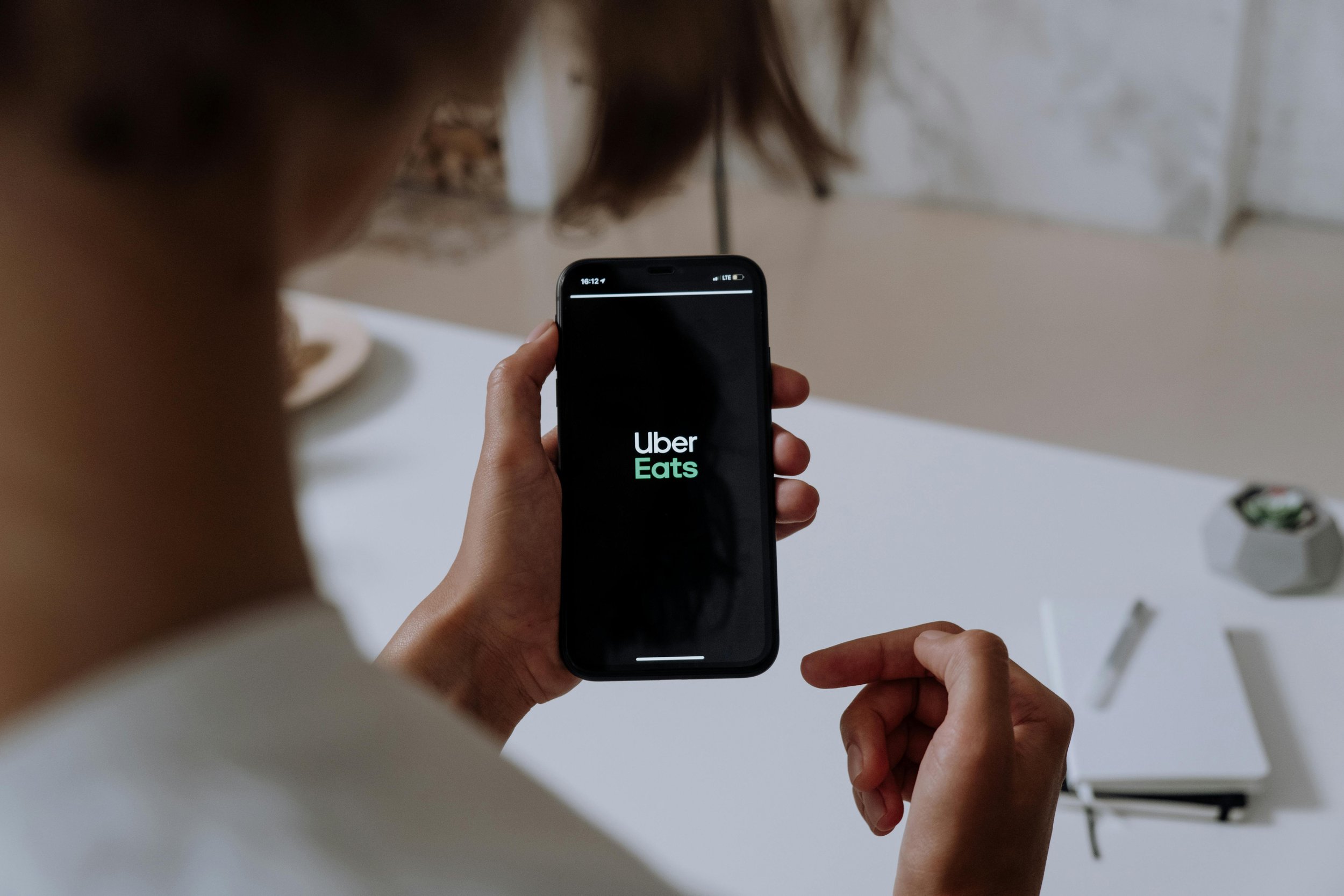
While I have pages and pages of notes on everything from initial onboarding to the daily grind of navigating orders, maps, and payouts, I’m not going to unpack all of that today. I could write a book about the friction alone.
What I discovered is that the problems reveal themselves through repetition. A single glitch, confusing prompt, or moment of friction is tolerable. However, repeated across hundreds of deliveries, over and over, and the UX design begins to feel less like friction and more like mental torture. And it’s not just annoyance — it’s math. On my first week doing Uber Eats, after factoring in petrol and wear-and-tear on my car, I was earning $19.07 an hour.
If you’ve ever been in a supermarket and seen someone moving frantically, scanning items on their phone while darting through the aisles… that’s me. And honestly? GET OUT OF THE WAY.
Not all deliveries are created equal. Some are easier than others. Some make you question all of your life choices, leaving you muttering to yourself and gripping the wheel like it’s the last anchor in the world.
Ordinarily, I avoid the inner-city. But recently, curiosity — and a bit of self-inflicted research — led me to accept an order from Coles Richmond Icon. Parking is a nightmare. The city wasn’t built for gig workers in private cars. Every stop is a calculation: risk a fine, risk a delay, risk circling the block again. By the time I grab the groceries, my pay per minute is already bleeding.
The app offers no guidance. No clue where I could park without risking a fine. No way of knowing if I’d be circling the block for five minutes or fifteen. No hint at how much it would cost me — in time, in stress, in money. And nothing about how long the stop would take.
While the app technically flashes a timeline at the moment of the request, it demands an ‘Accept’ decision in under ten seconds — often while I’m already in motion. In practice, there is no safe opportunity to review the details. I either ignore the request and risk losing work, or interact with the app while driving and break the law. Not to mention that once the delivery is accepted, there is no way to know how long it will actually take — at least to my knowledge, and this was never covered in onboarding.
What is presented as a choice is, in reality, a legal dilemma. Australian road law prohibits drivers from touching their phones while driving, which includes food delivery drivers. Yet the app requires interaction within seconds in order to maintain access to work. In practice, this leaves me with two options: ignore incoming requests and risk lost opportunities (and potentially income), or interact with the device and risk being fined. The interface design effectively shifts that legal risk onto the driver.
$6. That’s how much parking would cost for the first hour. Of course, I only found that out when I arrived at the Coles car park — all in a day’s work for Uber Eats. $18. That’s how much the order would pay me. Suddenly, the math wasn’t mathing.
To be continued…