

Good Fortune (2025): Reflections on Workplace Culture, Collective Power, and Why This Film Matters
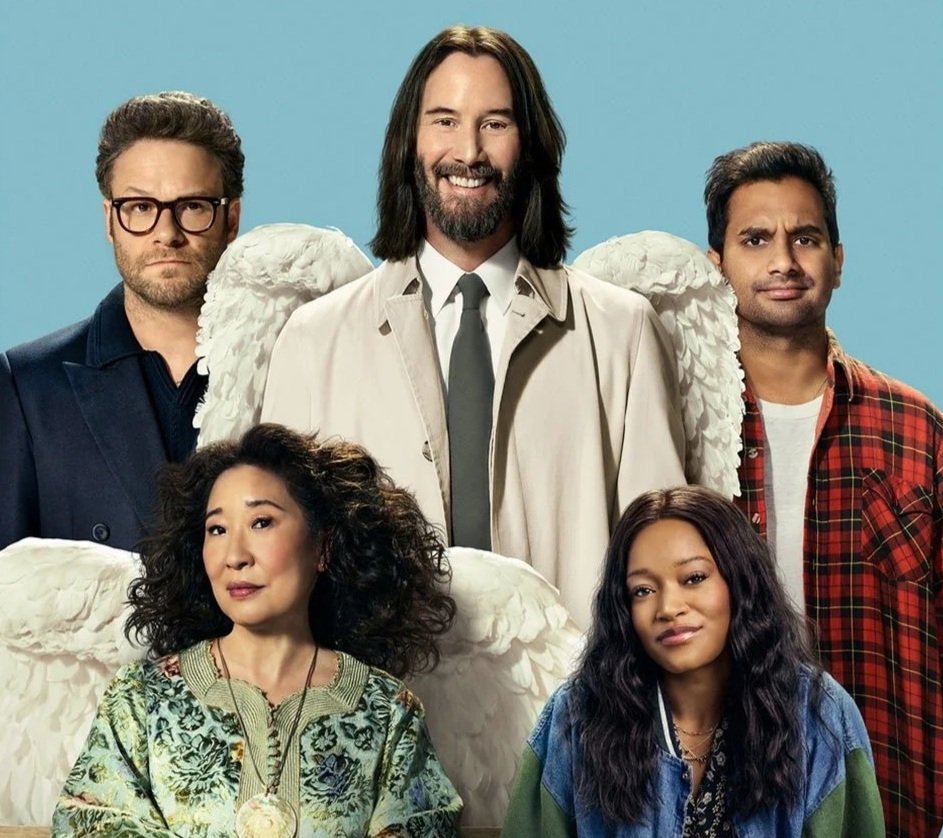
Beyond the laughs:
a film about work, wealth, and
what fortune really means
Contains spoilers for Good Fortune (2025).
I walked out of Aziz Ansari's Good Fortune in tears, which completely surprised me for a comedy. I was expecting a lighthearted story about a life swap between a struggling gig worker and a wealthy venture capitalist, but what I found was a sophisticated exploration of collective power, workplace inequality, and the slow, exhausting work of creating systemic change.
What struck me immediately was the extraordinary representation - Aziz Ansari himself, Keanu Reeves, Sandra Oh, Keke Palmer, Stephen McKinley Henderson, Wil Sylvince, Felipe Garcia Martinez, Blanca Araceli, Sherry Cola, Seth Rogen, Joe Mande... and the list goes on. The casting felt authentically inclusive of real world diversity.
As someone who's spent the past four years doing private advocacy work around workplace culture, this film hit me in ways I wasn't prepared for. Elena's fight to improve conditions at her workplace felt painfully familiar - though my own advocacy work has been from the outside rather than within organisations. In some ways, I believe it's easier to create change when you're outside the system - when you can speak truth to power without worrying about your next paycheck or office politics. But I still feel the familiar exhaustion that comes with resistance - not just from systems designed not to change, but from the people who continue to participate in maintaining them. The question of whether to keep fighting or give up becomes constant when meaningful change feels like swimming against a current of indifference.
Watching Elena persist in trying to unionise her workplace - facing pushback, a failed vote, and then wrestling with whether to give up entirely - it reflected my own struggle with wondering whether advocacy work actually makes a difference. For four years, I've been questioning whether I should keep pushing for authentic leadership and workplace transformation when progress feels so slow and uncertain.
For the past two years, I'd continued this work but felt increasingly despondent - I'd lost hope entirely that meaningful change was possible. But watching Elena refuse to accept 'give up' as an answer reminded me of something fundamental: that pushing for positive change, however difficult, is what gives work and life real meaning.
That's what made Elena's words hit me like a gut punch: “I just realized that change is difficult. You're changing something, you know. And no, we won't win right away, but you keep fighting and fighting and fighting, and… Because of that, you eventually do.” Her message about persistence in the face of difficulty was exactly what I needed to hear after years of wondering whether any of my effort was really worthwhile.
But beyond Elena's personal struggle, what moved me most was watching the Jeff and Arj storyline unfold - seeing Jeff (the wealthy tech VC) forced to experience Arj's reality of sleeping in his car and struggling with food delivery work for the very company he invests in - an app called Foodzr. Watching him navigate the precarity, the exhaustion, and even having his work arbitrarily cancelled by automated systems, completely shifts his perspective. Once he experiences firsthand what his investment decisions actually mean for workers - he doesn't just return to his comfortable life unchanged. He uses his power to disrupt those systems and tells fellow investors: 'We have to start treating these delivery drivers better. I'm talking benefits, a definite redesign of that rating system, and we are going to start paying them more, way fucking more.’
But even more importantly, I watched Jeff realise what wealth really depends on: 'The main reason we all have it so good is 'cause there's a shit ton of people that have it bad, very bad. And we need them to have it bad because it's what allows us to have it so good. But you know what? There is way more of them than there is of you. And one day, they're going to get pissed, and they're going to get organized, and they are going to burn down your fucking sauna and they are going to shit in your cold plunge, and they, in general, are going to fuck your shit up.’
And then Arj simply does it - he walks out of his delivery job, so strict that drivers need pee bottles because bathroom breaks aren't allowed with the rigid deadlines. When his coworkers follow him, that moment of collective action brought me to tears. Here was a perfect representation of how individual courage can spark collective action - one person's authentic choice giving others permission to act too. From there, he pursues his dream of making documentaries about workers like himself, turning his experience into storytelling that could inspire others to recognise their collective power. It felt like exactly why I started my advocacy work in the first place - that real change happens when people say ‘ENOUGH’ and others realise that they can too.
With all of that emotional resonance - Elena's persistence, Jeff's transformation, Arj's courage - I was completely unprepared for how much this film would move me. But there was still something uncomfortable about walking out of the cinema with tears on my face while simultaneously thinking about its faults. The disconnect between my emotional response and my critical assessment still felt unresolved - like I was missing something important about what I'd just experienced.
I walked out thinking it was only worth 3 stars.
Some of the comedy didn't quite land, the middle section dragged a bit, and the emotional relationships between the characters felt underdeveloped. But the truth is, despite my mixed critical response, those powerful moments had absolutely hit me in ways that didn't match my assessment at all.
I had to watch it again.
Going back to watch a film at the cinema is completely out of character for me - I rarely rewatch films, and never at the cinema. But the idea kept nagging at me all week. Something about those moments of collective action had stayed with me, and I couldn't shake the feeling that I'd missed something important.
The first time, I was so caught up analysing the themes of economic inequality, worker solidarity, and what it means to choose being yourself over what feels easy or socially acceptable - that I'd missed the quieter details that made those themes land so powerfully. I was overwhelmed by Jeff's brutal honesty, by Arj's courage, and by his coworkers following him - so much so that I didn’t fully pay attention to the dialogue or moments of human connection. I completely missed the ending shots of Arj and Elena’s joy together, the scenes of them talking and laughing with their families, the relationship beats that made the film's themes feel more grounded and human.
The second viewing revealed layers I’d completely missed. When I wasn't overwhelmed by the emotional impact of the collective action scenes, I could finally pay attention to the character relationships and artistic choices that made those themes resonate so powerfully.
I caught dialogue and nuance I'd missed entirely - how Elena's refusal to give up directly inspired Arj's own persistence, and how his choice to return to struggle was also motivated by reconnecting with his father, who no longer recognised him when he was wealthy. These weren't just plot points I'd glossed over; they were the emotional foundation that made his final declaration - 'I'm not Jeff. I'm Arj. And things aren’t going well right now, but I got to try. I want to see where it goes, as me.' - feel earned rather than just noble.
And then, when the title 'Good Fortune' finally appeared on screen at the very end - something I'd completely missed by leaving early the first time - everything suddenly clicked into place. I'd understood intellectually that the film was about connection over wealth, but seeing those two simple words after everything I'd just witnessed made the message land emotionally in a way it hadn't before. The real fortune isn't wealth or status, but authentic human connection. Those final shots of Arj and Elena together, and talking and laughing with their families suddenly made perfect sense as the visual representation of what true prosperity actually looks like.
I also noticed Ansari's choice to use cumbia rather than the more familiar salsa for the dance scenes. Cumbia, like all social dance, brings people together - which seems to reflect the film's themes about collective participation rather than individual performance. As a dance form brought to LA by Mexican immigrants, it connects specifically to LA's cultural landscape over a choice such as the more universally known salsa.
Additionally, the 'Send Me an Angel' song selection during the credits works on multiple levels and perfectly mirrors the film's themes. I’d completely missed this the first time because I was too embarrassed by my tears, and left when the lights came up.
The song's plea for an angel speaks both to romantic love and to the need for guidance when you're overwhelmed - exactly what Arj experiences. The band name 'Real Life' itself reinforces the movie's authentic storytelling - showing both the reality of poverty and how wealth genuinely solves problems, rather than offering sanitised versions of either struggle or success. The film honestly acknowledges that money improves life while arguing that authentic human connection is still what matters most.
The lyrics 'don't tell a lie, don't be false or untrue, it all comes back to you' prove prophetic for both main characters: Jeff must finally admit the brutal truth about how wealth depends on others' suffering, while Arj has to stop pretending he doesn't know Jeff, admit he'd been lying to his dad about his struggles, and confront why he really wanted to live a wealthy life - not just for comfort, but to finally become the successful person his father would respect instead of constantly comparing him to his tech-working cousin - a motivation that's never directly stated but subtly woven into their relationship.
The 'don't give up' messaging in the song also reinforces Elena's lesson about persistence. It's the kind of layered artistic choice that shows how much intention went into every element of the film - even the closing credits became part of the thematic statement about authenticity, persistence, and facing hard truths.
Speaking with an older couple in the cinema afterwards, I learned something that added yet another layer to the film's sophistication. I'd approached them because their laughter during the screening felt heartwarming - to me, it was a reassuring sign that others were connecting with the film too. When I asked what they'd thought, they shared that they had noticed the family and relationship elements, whereas I'd been completely absorbed by the worker solidarity themes. They also noted how the film honestly acknowledged that money genuinely does make life easier and more enjoyable, rather than pretending that wealth doesn't matter.
As we were talking, they also mentioned Keanu's real-life approach to wealth - his well-documented reputation for generosity and modest living despite enormous success - from his private foundation supporting cancer research to stories about sharing earnings with his film crews. Suddenly his casting felt less about acting and more about authentic embodiment of the film's values.
After digging deeper, I discovered countless reports of his everyday kindness - giving up a subway seat, waiting patiently in the rain for 20 minutes outside his own wrap party, spending time with a homeless man listening to his stories, helping stranded motorists, and carrying equipment alongside crew members. Even his real estate choices reflect this approach - reportedly buying a $US5 million home which, while expensive by normal standards, is very modest relative to his estimated net worth ($US380 million). Whether every specific story is accurate, the sheer volume and consistency of these reports suggest someone who genuinely lives the principles the film promotes - the same values Jeff eventually embraces when he demands better pay and conditions for his delivery workers.
All of these discoveries - the sophisticated character work I'd missed, the layered artistic choices, the meta-commentary of the casting - completely elevated my evaluation of the film from 3 to 4.5 stars.
While 78% of critics on Rotten Tomatoes recognised its quality, the film's 3.2 rating from 99,000 viewers on Letterboxd suggests general audiences are missing its deeper messaging and sophisticated artistry. Good Fortune is a truly ambitious cultural commentary disguised as lighthearted entertainment, and it’s exactly the kind of storytelling we need to spark necessary conversations about collective power, heart-driven leadership, and what constitutes real wealth.
For anyone working in workplace culture or advocacy, this film offers both tremendous hope and a kind of roadmap — for how individual authenticity can spark collective change, even when the path forward isn't always clear.
⭐⭐⭐⭐💫 4.5 stars